Sunday, 17 November 2013

Are all love stories fantasies?

I remember when I was a kid in highschool and wanted so much to experience that amazing feeling books and movies described, the magical bond between man and woman, the thing that makes everything worthwhile and even death irrelevant. So I had the feeling. It was amazing, it was magical, it was everything I expected it to be and more. And yet it all turned out to be an illusion, a manufactured fantasy of my own making that just tumbled down like a castle made of cards. And I always thought that was sort of weird and uncommon, but now I am thinking that maybe all romance is like that.

Could it be that love is something we are programmed to need to feel and we are just doing all is necessary in order to have the feeling into a familiar and comforting setting? All other sensations and feelings and needs are accounted for: you are happy because something good happened, you are hungry because you haven't eaten, you are disgusted because someone did something, you want to belong because we are a social species, but love is something that doesn't make a lot of sense, it's just there. It also feels too personal to assign it under "a species thing", even if its ultimate purpose is just that. So, in order to justify it, you need an origin story, just like any good comic book hero.

Thus the myth is born, perpetuated, kept alive as long as you have the feeling. And when you break a relationship up, again there are these justifications, stuff that just appears out of thin air and one or both of the people involved are always shocked, because they weren't there five minutes ago, when people were in love. "You killed my parents!" "You threw me in acid!" and so on. I don't want to stretch the superhero thing too much, though. Alternatively, think back and try to imagine all of your relationships as movies in the Kick Ass franchise. :)

So this is how I am seeing this: you meet this other person, you develop feelings of affection (or maybe just carnal lust, I don't care) and your brain starts churning up this script in the background. Once the script is ready, the focus group enjoyed it, the producers secured the financing, you already have the cast and bang! you have a blockbuster movie you call love. Until then it was just... less, "simple" affection or enjoyment, but with the origin story it becomes the superfeeling, capable of incredible feats, worthy of songs and tales.

As an argument for this vision I bring the terrible reluctance of people to dispel the magical script of their love affair. When the mystery of their feelings is laid bare they feel they have lost something. When outsiders are trying to look at it logically or to deconstruct the story they meet with fanatical resistance. After all, if you are an artist, making your own movie and starring in it, you really hate critics.

And when you are in a long relationship, one that spans more than the fabled three years, you continue to have the feelings, now intertwined with practical issues like who gets the car, who walks the dog, but they don't look so great because the love movie, as cool as it was, is old. You remember those times, maybe share them with your friends, just like remembering a good movie (made even better in your head by the bad parts you chose to conveniently forget) and your friends' reactions are just like for a movie, either sharing their own or criticizing yours or agreeing it was cool, maybe even getting the old "they don't make them like they used to" speech.

Of course, in order to definitively prove such a thesis, one must delve into the idea of what is real and what is not. That's a can of worms I am not opening. And believing every love story is a fantasy that covers up more mundane things and in which everyone involved participates willingly doesn't diminish its power. You can enjoy a movie even when you know it's not real, especially because you know it's not real. I also have to say something about the nature of control in a love situation. It's not clear to me, yet, but the gist of it is that this is why people do enjoy playing romantic games of seduction and betrayal, but ultimately dismiss the practice as not serious. It's the same kind of behaviour one sees in parents that scoff at their children's games, but watch TV all day. The thing is in a story you don't have control. It becomes more and more powerful the more the characters can say it all happened to them, rather than being something they planned. Somehow having control in a romantic relationship is frowned upon and having a good story on why losing control was a good thing is a form of art.

I'll end with a fragment of a movie I really liked, one that you probably don't associate with romance: The Name of the Rose. There was this scene where a girl, dirty and inarticulate, scavenging in the castle's garbage, meets our young protagonist interpreted by Christian Slater and just humps him like there is no tomorrow, groaning and moaning like a wild animal for the whole five minutes; then she leaves. Later on, when people are trying to burn her as a witch, the boy saves her. At the time I found that very romantic, even if they didn't even share a word. Maybe it's the fact that he gets to save her in the end, but most likely it's Slater's performance of looking at the girl with a longing and very confused gaze, the "what the hell is happening to me?" look that betrays the background script writing in the back of his skull.
Thursday, 7 November 2013

The magical world of advertising

There is nothing more fantastic than the advertising world. Whether it is a brilliant spot, winning prize after prize at ad competitions, or a formulaic and horribly boring video of a housewife getting aroused by the newest household products, marketing and advertising items have one thing in common: they can't possibly be true. Maniacal teens getting their faces stretched by hideously wide grins cannot possibly love a soft drink or a gum so much. The housewife I previously mentioned probably has a job and children to take care of on the side, chances are there is little that actually makes her happy and absolutely nothing that can make her ecstatic about cleaning products. The newest app is never as good as the banner annoyingly appearing over your web site indicates, nor is the latest enterprise software doing the job it's supposed to do beyond a superficial number of typical scenarios. No teen finds happiness by buying the latest smartphone or opting in the latest two year cell subscription.

The governments everywhere are not doing their job, not keeping the promises they made during electoral campaigns, companies try to hide their problems under the rug while bragging to anyone that listens of the quality of their staff and products, human resources hire people under false pretenses while employees advertise skills that they never had. Boys proffer their love to girls and they in turn promise to have actual sex after the relationship steadies. Security companies, national or commercial, are only interested in their own security rather than yours. People that sarcastically make fun of other people's commercials are never as cool as they attempt to look.

I don't know about you, but in the rare cases when software doesn't manage to remove ads completely from my browser or smart phone, the fact that the ads appear in front of me has no effect other than mild (or strong) annoyance. My mind filters out the flashing images, the over the top colors and embellished fonts, anyway. Even the user content and comments that have been touted as the soul of Web 2.0 (or is it 3.0 now?) which would allow me to feel connected and get the information I need, they either reek of aggressive stupidity or bring little useful information to the table. I don't care what the top N items are in any list, nor am I interested in what other people Liked or not on Facebook. I never give money to beggars and don't buy stuff from loud people.

As far I can see, there is nothing that can be called advertising that is actually true or at least beneficial. So I have to wonder, in view of this impression of mine, could it be possible that the promise of advertising as a whole is just a lie as well, that the advertising of the marketing science and art is just as much bullshit as anything else the comes out of their world? Could it be that advertising's greatest feat is to make us think it actually works?

Monday, 4 November 2013

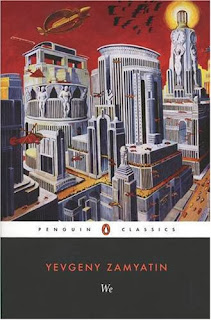
We, by Yevgeny Zamyatin (Eugene Zamiatin)

Book cover We is a classic book, written by Russian author Yevgeny Zamyatin, who envisioned how the future in the hands of the Bolsheviks will work against the individual. He imagined a world in which all people shave their head, wear the same uniform and have numbers instead of names and live in completely transparent buildings, with no privacy. As the preface of the book there are three commentaries on Zamiatin's genius, history as a writer in Russia, then his voluntary exile and the interdiction of his works in Russia.

So did I like the book? No. To say that is dated is an understatement, but it's not only that. The style is that of a diary, but one in which dialogues between people are described verbatim. The way they speak is emotional, hysterical, they interrupt each other and words are incoherent, so contradictory to the premise of the book. Even the inner thoughts of the main character are chaotic, childish, delirious, with wild mood swings. It was so horrible that, after deciding that 200 PDF pages were not going to be a lot of reading, I stopped at 50 and started skipping ahead. The entire book is like that.

Maybe Zamiatin was a great writer, but I don't see it. Just because he was Russian is no excuse for his incoherence. It felt like he wrote the book while intoxicated; with too much coffee. Even if he starts his book with Dear readers, you must think, at least a little. It helps, I believe that it was his duty as a writer to communicate his ideas in a digestible form. Maybe thinking is different from person to person, Zamiatin. If I think about it, the story within is similar to the movie Equilibrium, only that was more action based, as any American movie is prone to be, and watchable. The same champion of the system being seduced (through a woman, how else?) by the emotions that he was sworn to fight against.

About the subject of the book, I can say that stories about rebels fighting Utopian regimes are making me feel conflicted. I care about the personal desires of the individual, but I also care about the overall system. One must understand that a centralized and overall controlled system is as disturbing to a person that experienced individual freedom as is a decentralized system based on individuals is for someone that lived in a different environment. To assume that one or the other knows better is just arrogant and stupid. The worse thing that can happen, in my view, is to only have one acceptable system that, even if we could leave one country for another, would be the same all over the world.

On the other hand, once you, as an individual, decide that something is right and something is wrong, you have a responsibility to act. I just remember that quote Slaves dream not of freedom, but of becoming masters. It would be a lot easier for me to accept people rebelling against systems if they would stop attempting to change the world for everybody, not just themselves.

Well, I will leave you with a quote from the book, one that seemed eerily contemporary: If human liberty is equal to zero, man does not commit any crime.

Wednesday, 30 October 2013

Rotating text with GDI Graphics within given bounds

An unlikely blog post from me, about graphics; and not any kind of graphics, but GDI graphics. It involves something that may seem simple at first: rotating a text in a rectangle container so that it is readable when you turn the page to the left. It is useful to write text in containers that have a height that is bigger than the width. This is not about writing vertically, that's another issue entirely.
So, the bird's eye view of the problem: I had to create a PDF that contains some generated images, a sort of chart with many colored rectangles that contain text. The issue is that some of them are a lot higher than they are wide, which means it is better to write text that is rotated, in this case to -90 degrees, or 270 degrees, if you like it more. To the left, as Beyoncé would put it.

I created the image, using the Bitmap class, then got a Graphics instance from it, then starting drawing things up. It's trivial to draw a line, fill a rectangle, or draw an arc. Just as easy it is to write some text, using the DrawString method of the Graphics object. I half expected there to be a parameter that would allow me to write rotated, but there wasn't. How hard could it be?

Let's start with the basics. You want to draw a colored rectangle and write some text into it. This is achieved by:
var rectangle=new Rectangle(x,y,width,height); // reuse the dimensions
g.FillRectangle(new SolidBrush(Color.Blue),rectangle); // fill the rectangle with the blue color
g.DrawRectangle(new Pen(Color.Black),rectangle); // draw a black border
g.DrawString("This is my text",new Font("Verdana",12,GraphicsUnit.Pixel),new SolidBrush(Color.Black),rectangle, new StringFormat {
LineAlignment=StringAlignment.Center,
Alignment=StringAlignment.Center,
Trimming = StringTrimming.None
}); // this draws a string in the middle of the rectangle, wrapping it up as needed

All very neat. However, you might already notice some problems. One of them is that there is no way to "overflow" the container. If you worked with HTML you know what I mean. If you use the method that uses a rectangle as a parameter, then the resulting text will NOT go over the edges of that rectangle. This is usually a good thing, but not all the time. Another issue that might have jumped in your eyes is that there is no way to control the way the text is wrapped. In fact, it will wrap the text in the middle of words or clip the text in order to keep the text inside the container. If you don't use the container function, there is no wrapping around. In other words, if you want custom wrapping you're going to have to go another way.
Enter TextRenderer, a class that is part of the Windows.Forms library. If you decide that linking to that library is acceptable, even if you are using this in a web or console application, you will see that the parameters given to the TextRenderer.DrawText method contain information about wrapping. I did that in my web application and indeed it worked. However, besides drawing the text really thick and ugly, you will see that it completely ignores text rotation, even if it has a specific option to not ignore translation tranforms (PreserveGraphicsTranslateTransform).

But let's not get into that at this moment. Let's assume we like the DrawString wrapping of text or we don't need it. What do we need to do in order to write at a 270 degrees angle? Basically you need to use two transformations, one translates and one rotates. I know it sounds like a bad cop joke, but it's not that complicated. The difficulty comes in understanding what to rotate and how.
Let's try the naive implementation, what everyone probably tried before going to almighty Google to find how it's really done:
// assume we already defined the rectangle and drew it
g.RotateTransform(-270);
g.DrawString("This is my text",new Font("Verdana",12,GraphicsUnit.Pixel),new SolidBrush(Color.Black),rectangle, new StringFormat {
LineAlignment=StringAlignment.Center,
Alignment=StringAlignment.Center,
Trimming = StringTrimming.None
}); // and cross fingers
g.ResetTranformation();
Of course it doesn't work. For once, the rotation transformation applies to the Graphics object and, in theory, the primitive drawing the text doesn't know what to rotate. Besides, how do you rotate it? On a corner, on the center, the center of the text or the container?
The trick with the rotation transformation is that it rotates on the origin, always. Therefore we need the translate transformation to help us out. Here is where it gets tricky.

g.TranslateTransform(rectangle.X+rectangle.Width/2,rectangle.Y+rectangle.Height/2); // we define the center of rotation in the center of the container rectangle
g.RotateTransform(-270); // this doesn't change
var newRectangle=new Rectangle(-rectangle.Height/2,-rectangle.Width/2,rectangle.Height,rectangle.Width); // notice that width is switched with height
g.DrawString("This is my text",new Font("Verdana",12,GraphicsUnit.Pixel),new SolidBrush(Color.Black),newRectangle, new StringFormat {
LineAlignment=StringAlignment.Center,
Alignment=StringAlignment.Center,
Trimming = StringTrimming.None
});
g.ResetTranformation();
So what's the deal? First of all we changed the origin of the entire graphics object and that means we have to draw anything relative to it. So if we would not have rotated the text, the new rectangle would have had the same width and height, but the origin in 0,0.
But we want to rotate it, and therefore we need to think of the original bounding rectangle relative to the new origin and rotated 270 degrees. That's what newRectangle is, a rotated original rectangle in which to limit the drawn string.

So this works, but how do you determine if the text needs to be rotated and its size?
Here we have to use MeasureString, but it's not easy. It basically does the same thing as DrawString, only it returns a size rather than drawing things. This means you cannot measure the actual text size, you will always get either the size of the text or the size of the container rectangle, if the text is bigger. I created a method that attempts to get the maximum font size for normal text and rotated text and then returns it. I do that by using a slightly larger bounding rectangle and then going a size down when I find the result. But it wasn't nice.

We have a real problem in the way Graphics wraps the text. A simple, but incomplete solution is to use TextRenderer to measure and Graphics.DrawString to draw. But it's not exactly what we need. The complete solution would determine its own wrapping, work with multiple strings and draw (and rotate) them individually. One interesting question is what happens if we try to draw a string containing new lines. And the answer is that it does render text line by line. We can use this to create our own wrapping and not work with individual strings.

So here is the final solution, a helper class that adds a new DrawString method to Graphics that takes the string, the font name, the text color and the bounding rectangle and writes the text as large as possible, with the orientation most befitting.

using System;
using System.Collections.Generic;
using System.Drawing;
using System.Linq;
using System.Text;
using System.Text.RegularExpressions;
using System.Threading.Tasks;

namespace GraphicsTextRotation
{
public static class GraphicsExtensions
{
public static void DrawString(this Graphics g, string text, string fontName, Rectangle rect, Color textColor, int minTextSize=1)
{
var textInfo = getTextInfo(g, text, fontName, rect.Width, rect.Height); // get the largest possible font size and the necessary rotation and text wrapping
if (textInfo.Size < minTextSize) return;
g.TranslateTransform(rect.X + rect.Width / 2, rect.Y + rect.Height / 2); // translate for any rotation
Rectangle newRect;
if (textInfo.Rotation != 0) // a bit hackish, because we know the rotation is either 0 or -90
{
g.RotateTransform(textInfo.Rotation);
newRect = new Rectangle(-rect.Height / 2, -rect.Width / 2, rect.Height, rect.Width); //switch height with width
}
else
{
newRect = new Rectangle(-rect.Width / 2, -rect.Height / 2, rect.Width, rect.Height);
}
g.DrawString(textInfo.Text, new Font(fontName, textInfo.Size, GraphicsUnit.Pixel), new SolidBrush(textColor), newRect, new StringFormat
{
Alignment = StringAlignment.Center,
LineAlignment = StringAlignment.Center,
Trimming = StringTrimming.None
});
g.ResetTransform();
}

private static TextInfo getTextInfo(Graphics g, string text, string fontName, int width, int height)
{
var arr = getStringWraps(text); // get all the symmetrical ways to split this string
var result = new TextInfo();
foreach (string s in arr) //for each of them find the largest size that fits in the provided dimensions
{
var nsize = 0;
Font font;
SizeF size;
do
{
nsize++;
font = new Font(fontName, nsize, GraphicsUnit.Pixel);
size = g.MeasureString(s, font);
} while (size.Width <= width && size.Height <= height);
nsize--;
var rsize = 0;
do
{
rsize++;
font = new Font(fontName, rsize, GraphicsUnit.Pixel);
size = g.MeasureString(text, font);
} while (size.Width <= height && size.Height <= width);
rsize--;
if (nsize > result.Size)
{
result.Size = nsize;
result.Rotation = 0;
result.Text = s;
}
if (rsize > result.Size)
{
result.Size = rsize;
result.Rotation = -90;
result.Text = s;
}
}
return result;
}

private static List<string> getStringWraps(string text)
{
var result = new List<string>();
result.Add(text); // add the original text
var indexes = new List<int>();
var match = Regex.Match(text, @"\b"); // find all word breaks
while (match.Success)
{
indexes.Add(match.Index);
match = match.NextMatch();
}
for (var i = 1; i < indexes.Count; i++)
{
var pos = 0;
string segment;
var list = new List<string>();
for (var n = 1; n <= i; n++) // for all possible splits 1 to indexes.Count+1
{
var limit = text.Length / (i + 1) * n;
var index = closest(indexes, limit); // find the most symmetrical split
segment = index <= pos
? ""
: text.Substring(pos, index - pos);
if (!string.IsNullOrWhiteSpace(segment))
{
list.Add(segment);
}
pos = index;
}
segment = text.Substring(pos);
if (!string.IsNullOrWhiteSpace(segment))
{
list.Add(segment);
}
result.Add(string.Join("\r\n", list)); // add the split by new lines to the list of possibilities
}
return result;
}

private static int closest(List<int> indexes, int limit)
{
return indexes.OrderBy(i => Math.Abs(limit - i)).First();
}

private class TextInfo
{
public int Rotation { get; set; }
public float Size { get; set; }
public string Text { get; set; }
}
}
}

I hope you like it.

Friday, 25 October 2013

Transposition of ranges in SQL and charts

I had this database table containing ranges (a start value and an end value). The challenge was creating a query that overlaps and transposes those ranges so I can say how many ranges are at any point in the total interval or values. As an example, "SELECT * FROM Ranges" would result in a table like:
StartEnd
1020
1030
2535
2040
and I am looking for something like this:
ValueCount
00
10
......
102
112
......
242
253
263

A naive implementation would get the minimum Start (or start with 0, as I did) and the maximum End, create an in memory or temporary table (Values) from min to max using an ugly WHILE block, then join it with the Ranges tables something like:
SELECT v.Val,Count(1) as Nr
FROM #Values v
INNER JOIN Ranges r
ON r.Start<=v AND r.[End]>=v

This kind of works, but for large ranges it becomes difficult. It takes a lot to create the Values table and the join and for extreme cases, like I had with values from 0 to 6 billion, it becomes impossible. The bottleneck here is this Values table, which is pretty much a horror to create and maintain. But what if you don't need all the values?

Before I tell you the solution I found, be warned that you have to properly define what a range is. Is a range 10-20 actually 10-19? In my case it was so, so that is why there are some subtractions with 1 or less than rather than less or equal conditions.

The solution is this:
SELECT DISTINCT Val
INTO #Values
FROM (
SELECT 0 as Val
UNION ALL
SELECT Start FROM Ranges
UNION ALL
SELECT [End]-1 FROM Ranges
) x
ORDER BY Val

The idea is that after you compute the ranges count per each of the start and end values you know that between one and the next the count of ranges will remain the same. The join is significantly faster, there is no ugly WHILE block and you don't need a 6 billion value table. It's easier to plot on a chart as well, with either of these variations:
See the variations:
SELECT v.Val,
Count(r.Start) as Nr
FROM #Values v
LEFT JOIN Ranges r
ON r.Start<=v.Val AND r.[End]>v.Val
GROUP BY v.Val

The result of the query above will be:
ValueNr
00
102
192
202
253
293
342
391
Hope this helps you

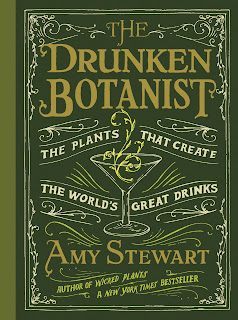
The Drunken Botanist - The Plants That Create the World's Great Drinks, by Amy Stewart

Book cover I will go forth immediately and say that this book is hard to read. It's not just that it uses English names of fruits and plants not often met in normal conversation or movies, it's not only that it uses the English measurements units that most Europeans have no understanding of and it's not even the author's apparent obsession with Angostura bitters :). It's because the book is filled with information and it is better suited to be used as a reference than a one-off read. It is obvious that in The Drunken Botanist the author, Amy Stewart, put a great deal of research; such an amount, in fact, that it would be impossible to be able to absorb all of it in one read. You realize that a book is great when you see affecting you in your every day life. No, I did not get drunk every day on strange cocktails, even if the temptation certainly existed, but I found myself looking at plants everywhere and wondering how they would taste in a drink. "Is that fruit edible? Probably not, it's red and the fruit of a decorative tree, so probably it is poisonous. But surely there is a way to destroy the poison and enjoy the taste in an alcoholic drink." That sort of thing.

And what I find even nicer is that the author is ready to continue the conversation started in the book on a special website called DrunkenBotanist.com

The book is split into very little chapters, each on a certain plant, a little bit of history - the degree of details varying wildly, but described with great humor and passion, the way they are used in drinks, cocktail recipes, some botanical or chemical info - although not too much. There are organized by themes, like leaves or fruits, grasses or trees, and so on, but essentially it's an enumeration of plants and their uses. This is something I didn't like that much. My issue is that I expected to see more botanical information, like how plants are related and how the drinks made from them are related. As such, you only get a few words at the beginning of a chapter about the plant's family, but no connection is made. Of course, no one stops you for researching and doing it yourself.
Another thing that bothered me a little was the images. I agree that full color and size images of the plants described would have printed as a huge book, but the e-book version I read had no such limitations. Instead of seeing a simplistic representation of some plants, I would have liked to see the plant itself. That would have helped me understand what each plant was in my language, as well.

I have to conclude that the book is a very interesting one, albeit difficult to finish reading. I understand the need to earn money and thus sell it as a book, but for me it seems that the book's format would have been a lot more appropriate for a web site and that some features should have been different in the electronic version than the printed one. Instead, the Drunken Botanist site is actually a blog, in a blog format, which is unusable as a reference, really. I recommend browsing the book and certainly have it available. Some information in it is great at parties and the botanical insight into the common drinks and their ingredients is fascinating. But think of it as something to have ready for when you need to know what you are mixing. I would say it's a mandatory read for any bartender, though.

Tuesday, 15 October 2013

TV Series I've Been Watching - Part 16

It's the middle of autumn again and more and more series are making their entry into the list. But there are a lot of shows that I carry around from post to post without actually watching them. I've decided to remove them from the list until that time comes.


Let's start with the already described ones:

  • Doctor Who - Math Smith has left the show and the new doctor is an actor which I really like, Peter Capaldi, who you might remember from The Thick of It. Unfortunately, he will be very polite in Doctor Who; I would have loved to see him as irreverent, sweary and Scottish as in his other role.
  • Dexter - season 8 of the series has just ended (disastrously) and thus the show. It was a good run, I guess, even if the last seasons were quite ridiculous.
  • True Blood - I am becoming conflicted about this show. On one hand some of the storylines are very interesting, while on the other the multitude of stories, one more over the top than the other, shown in parallel in every episode, make it all feel like one supernatural soap opera. The ending of the season, with the invasion of the zombie vampires, also left me deflated.
  • The Good Wife - the fifth season just started, but I haven't got around to it. I think the show continues to be good, but they probably should wrap it up and do something else before it too dissolves into pointlessness.
  • Haven - the fourth season has just started. I will probably watch it with the wife, she seems to enjoy it.
  • Falling Skies - the third season was just weird. It's difficult enough to justify an almost medieval human resistance while being caught in an interstellar war even without having incompetent writers, which unfortunately the show has.
  • Southpark - Southpark is still running hot at season 17. The Butters episode in which he becomes a DMV witness was delicious.
  • Suits - Suits started fun, I really enjoyed it; for stupid reasons, but I did. The third season showed me that even those reasons are quickly fading. Everybody acts over the top and with almost no connection to real life. It's like a movie made by advertisers.
  • Breaking Bad - I started watching the first episode from season 5 only to realize I don't understand what the hell is going on. Did I even watch the fourth season? Unclear.
  • Homeland - season three starts with Carrie being thrown to the wolves as she goes more and more insane. Having a similar situation in the family doesn't make it easy to watch.
  • The Walking Dead - the fourth season just started, but I didn't get around to it, yet.
  • Game of Thrones - there was a lot of outrage on the Internet linked to the Red Wedding episode. It's the first true test of the show. If people will continue watching it even after blatantly killing some of their favourite characters, then the show will go on until Martin stops writing (or maybe not even then). I am afraid it might not happen that way, though.
  • Mad Men - does anyone remember this started as a movie about advertising people? Right now it seems to be more about the "mad" part of the title, as Don devolves more and more into a crazy person.
  • Continuum - Continuum continues, even if it got kind of weird in the last season. Everybody is related to everybody and makes deals with all. It's becoming an intertemporal high-school drama.
  • Copper - Copper started as in interesting show about Irish policeman in Five Points, but after the second season it got cancelled. The last season was pretty confusing and less and less having to do with the job and more with the personal. I did not like that.
  • Longmire - who killed the killer of madam Longmire? Was it sir Longmire? No. Was it Lou Diamond Philips? No again. Was it the killer hired by Lou Diamond? No, because he wasn't a killer. Does that mean people will stop worrying about it? Definitely not. I really want Longmire to retain that authentic countryside sheriff feel; the screenwriters seem to feel otherwise.
  • The Newsroom - drama, politics, revenge, more drama and finally, some drama. All over the top and on high speed. No wonder the city never sleeps if everybody is overactive.
  • Arrow - new Arrow season, with tales of bringing more superheroes into the story, like The Flash. Will this become the testbed for Playstation and XBox game scripts?
  • Elementary - the second season started with some interesting episodes. One even features Lestrade, as a celebrity addict. Funny, that.
  • House of Cards - this show is the first to be launched on Netflix (and produced by them as well). This means the entire first season was launched on the same day. No more waiting week after week to see a bit of the show, but how much time will it pass now until the next season? It's almost like releasing 10 hour movies.
  • Father Ted - I watched almost all episodes of this very old and obscure show, basically just because it was old and obscure. It's a laughing-track comedy about two idiotic priests on a small remote island in Ireland. Supposedly ireverent to religion, it's just a very silly show.

New shows:

  • The Tomorrow People (2013) - this remake of a really dumb old series just started. I haven't started watching it, but I've read a review that seemed to praise it. It stars beautiful young actors with superpowers, though.
  • The Legend of Korra - the second season has started with a transparent nefarious plot that only the dumb female avatar doesn't seem to get. Her character is so annoying!! Ugh!
  • Atlantis - I expected Atlantis to be a sort of Rome or Spartacus. The bronze-punk science fiction would have made a great show. Unfortunately it seems to be more a kind of a Hercules/Xena kind of show. There is this modern guy who gets into Atlantis through a portal, meets Pithagoras and Hercules, who are both different from the myths, and runs around with swords.
  • By Any Means - I could barely survive through the first episode. This is a British show about a group of people that are hired by the police to bring people to justice. Why doesn't the police do that directly? Because this group uses illegal and imoral acts to achieve their goals, then rationalize them by them being "the good guys" and acting all cool and funny. The show was basically offensive to me.
  • Hostages - a show about a doctor who must opperate on the United States president. Her family is taken hostage to force her to kill the president. Yeah, like that could happen. It has good actors and an intriguing plot, but it could go both ways. I've watched just the first episode.
  • Ironside - another show about a cop. This time the cop is black and in a wheelchair, even if he continues to strong arm suspects and his team with impunity. I found it pretentious and yet another show which is trying to force feed us vigilante justice from charismatic characters.
  • King and Maxwell - a show about a detective agency run by former Secret Service agents. At last a detective agency not run by complete amateurs that got bored. Rebecca Romjin is one of the pair, which makes the show nice to look at, at least. Now, the first episodes felt a bit silly, like a comedy, so I didn't continue watching it, but it could become better.
  • Low Winter Sun - TV series starring two less known, but nevertheless good actors: Lennie James and Mark Strong. It's very dark, with corrupt policemen and rampant gangs, but I can't say I enjoyed it much. Probably because it seems to miss a point.
  • Ray Donovan - something that stars Liev Schreiber and John Voight should be better than this, but the show is not bad. There is this guy that acts like a sort of damage control expert who has to contend with his father getting out of jail and being a dick. Control that damage, if you can!
  • Rewind - it is the season of shows about people playing God. This time they are not policemen, thank you, but an agency that uses technology to go back in time and "fix" things. All seemed straightforward until the end of the first episode, which promises a longer story arch and maybe even more interesting action.
  • Serangoon Road - another Australian show about private detectives, this time placed in Malaysia. Chinese, Australians, Javanese, British and Americans are all dancing around each other, trying to win the jackpot in this country torn by civil unrest and government dissolution. An interesting show, which I continue to watch.
  • Siberia - I almost want to ask "What is Siberia?" in a Matrixy sort of way. It is a series that starts as a reality show, only to have the contestants meet strange phenomena until the entire premise explodes and they find themselves stuck in Siberia, with no contact to the outside world and in mortal (supranatural/scifi) danger. The problem with the show is that it is pretty inconsistent and difficult to watch. It's like it doesn't know what it wants to be: a reality show, a Lost rip-off or something else.
  • Sleepy Hollow - Sleepy Hollow the movie was a masterpiece, combining a moody atmosphere that hinted of the supernatural with a main character that used logic and science to prove that it actually wasn't. The Sleepy Hollow series is the complete opposite, with a clear supernatural storyline involving good and bad witches, demons and Ichabod Crane, a civil war soldier who has found himself in the present and now helps (of course) the police deal with the rise of evil. It could have been good, but I really don't like any of the actors or characters, except maybe the sheriff, but he dies.
  • The Blacklist - I really wanted to like the series, because it stars James Spader (an old and bald one), an actor which I really liked in the past. But it's a confused mess. Spader plays the role of a rogue FBI agent that surrenders after 20 years only to help the FBI find catch the "truly bad" guys. He enlists the help of a girl FBI agent who probably is his daughter, even if he doesn't say it out loud. She is basically a clone of the FBI agent from Haven, while Spader's character is an arrogant prick. Impossible to empathise with anyone and even harder to see a point of this show.
  • The Bridge - an American remake of the Danish/Swedish series Bron, it involves a murderer that leaves a body on the exact border of Mexico and the US, forcing the creation of a joint taskforce. Beautiful Diane Kruger plays the functional autist American agent, while Demián Bichir plays the complex Mexican policeman. There are other characters, but some are even detrimental to the story, in my view. The show is solid and has some interesting and good acting. I hope it stays that way.
  • The Crazy Ones - just so you don't say I don't watch any comedy shows, this stars Robin Williams as a crazy and inspirational ad man, helped by two equally crazy guys and his daughter, played by Sarah Michelle Gellar. It has its moments, but it isn't really my style. Why can't they make comedy that also seems real, rather than completely over the top?
  • The Originals - oh, what a bunch of pretentious crap! a (too) late comer in the vampire TV show business, it even tries to reuse the vampire aristocrat variation. The only modern take of this soap opera like show is that it also adds witches to the mix. This is they year of the witches, after we got tired of vampires and werewolves and zombies didn't quite catch on.
  • The Psychopath Next Door - not an easy show to watch, it's full of psychological violence. It features a young very attractive female psychopath and how she deals with the world. Being a British show she really acts like a sociopath, shows no remorse and does the most atrocious acts just to get ridiculously unimportant things, rather than help the police catch bad guys or whatever :) A really good beginning and a fascinating glimpse in the mind of a true psycho.
  • Under The Dome - when in doubt, use a Stephen King story. Alas, I usually don't like King's writing it tends to drag on. Making a TV series out of one makes a rather boring watch. This is a sci-fi show about a transparent and impenetrable dome that completely isolates a small community from the outside world. The situation quickly devolves because of the people there, as primate tribes are wont to do when consequences disappear.
  • What Remains - British show, I just started to watch the first episode. It seems to revolve around human remains, discovered a long while after the crime (if it was one) and how people lives are affected by the investigation. Could be good.
  • Witches of East End - told you this is the season of the witch. This show is about a family of witches, incredibly good looking ones. The mother is Julia Ormond, her sister is Madchen Amick and one of the daughters is this hot and curvy brunette. Of course good looking guys and evil witches appear soon after. It seems a typical teen show, with drama coming exclusively from social situations, people who are romantic interests or/and are trying to kill you.
  • The Last Witch - The show just appeared and I haven't had the chance to watch it, but it's about witches, which validates my view that witches are the new vampires. At least this show is British.
  • Blackout - a faux documentary British series about a fictional British power blackout that lasted for more than a week. Kind of hard to watch because it's made like a montage of different camera shots taken by different people on handhelds and phones.

Well, it seems that removing the shows that I am not actively watching makes this list more manageable, but it also means you will have to look at more "TV Series I've been watching" blog posts to get an overview.