Friday, 28 October 2011

Optimizing Visual Studio solutions and projects or how good intentions can pave a lot of road

I've had a horrible week. It all started with a good Scrum sprint (or so I thought) followed by a period of quiet in which I could concentrate on my own ideas. And one of my ideas was to optimize the structure of the solution we work on, containing 48 projects, in order to save space and compilation time. In my eyes, I was a hero, considering that for a company with tens to hundreds of devs, even a one second increase in speed would be important. So, I set up doing that.

Of course, the sprint was not as good as I had imagined. A single stored procedure led to not less than four bugs in production, with me being to blame for them all. People lost more time working on reproducing the bugs, deploying the fix, code reviewing, etc. At long last I thought I was done with it and I could show everyone how great the solution looked now (on my computer) and atone for my sins.

So from a solution that spanned from 700Mb clean and 4Gb after compilation, I managed to get it to a maximum of 1.4Gb. In fact, it was so small I could put it all in a Ram disk, leading to enormous speeds. In comparison, a normal drive goes to about 30MB per second, an SSD drive (without encryption) goes to about 250MB/s, while my RamDisk was running at a whooping 3.6GB/s. That sped up the compilation and parsing of files. Moreover, I had discovered that MsBuild has this /m parameter that makes it use more processors. A compilation would go to about 40 seconds, down from two minutes and a half. Great! Alas, it was not to be so easy.

First of all, the steps I was considering were simple:
  • Take all projects and make them have a single output folder. That would decrease the size of the solution since there would be no copies of the .dll files, Then the sheer speed of the compilation would have to increase, since there would be less copying and less compilation.
  • More importantly, I was considering making a symlink to a RAM drive and using it instead of the destination folder.
  • Another step I was considering was making all references to the dll files in the output folder, not to the projects, allowing for projects to be opened independently.


At first I was amazed the solution decreased in size so much and I just placed the entirety of it into a RAM drive. This fixed some of the issues with Visual Studio, because when I was selecting a file through a symlink to add as a reference, it would resolve to the target folder instead of the name of the symlink. And it was't easy either. Imagine removing all project references and replacing them with dll references for 48 projects. It took forever.

Finally I had the glorious compilation. Speed, power, size, no warnings either (since I also worked on that) and a few bug fixes thrown in there for good measure. I was a god! Then the problems appeared.

Problem 1: I had finished the previous sprint with a buggy stored procedure committed to production. Clients were losing money and complaining. That put a serious dent in my pride, especially since there were multiple problems coming from both less attention to how I wrote the code to downright lack of knowledge of the flow of the application. For the last part I am not really the only one to blame, but it was my responsibility.

Problem 2: The application was throwing some errors about the target framework of a dll. It was enough to make me understand a major flaw in my design: there were .Net 3.5 and .Net 4.0 assemblies in the solution and placing them all in the same output folder would break some build scripts. Even worse, the 8 web projects in the solution needed to have their output in the bin folder, so that IIS would find them. Fixed it only to see the size of the solution rise back to 3Gb.

Problem 3: Visual Studio would not be so smart as to understand that if a project is loaded, going to the declaration of a member in the compiled assembly means I want to see the actual source, not the IL code. Well, sometime it worked, but sometimes it didn't. As a result I restored the project references instead of the assembly references.

Problem 4: the MsBuild /m flag would do wonders on my machine, but it would not do much on the build server. Nor would it do its magic on slower, less multiprocessor computers than my own.

Problem 5: Facing a flood of problems coming from me, my colleagues lost faith and decided to not even try the modifications that removed the compilation warnings from the solution.

Conclusion: The build went marginally faster, but not enough to justify a whole week of work on it. The size decreased by 25%, making it feasible to put it all in a RAM Drive, so that was great, to the detriment of working memory. I still have to see if that is a good or a bad thing. The multiprocessor hacks didn't do much, the warnings are still there and even some of my bug fixes were problematic because someone else also worked on them and didn't tell anyone. All in a week's work.

Things I have learned from all this: Baby steps. When I feel enthusiasm, I must take it as a sign of trouble. I must be dispassionate as an ice cube and think things through. If I am working on a branch, integrate the trunk into it every day, so as to not make it harder to do at the end. When doing something, do it from start to finish, no matter what horrors I see while doing it. Move away from Sodom and not look back at it. Someone else will fix that, maybe, you just do your task well. When finishing something, commit it into the source control so it can easily be reverted through a single atomic operation.

It is difficult to me to adjust to something that involves this amount of planning and focus. I feel as if the chaotic development years of my youth were somewhat better, even if at the time I felt that it was stupid and focus and planning was needed. As a good Romanian, I am neurotic enough to see the worst side of everything, master at complaining about it, but incapable of actually doing something. Yeah... this was a bad week.
Saturday, 22 October 2011

Two interesting news and no news

No news from my personal or work fields. However, I've found two interesting news just today and I wanted to share them.

First, the development of a camera to capture pictures that you can focus later. Although I have heard of solid metal lenses that would be less than 1$ to make and would achieve the same effect, the only actually functioning system I've heard of so far is the Lytro Living Picture camera. Here is an Ars Technica article on it and here is a YouTube video demo.

The second news is more IT related. It involves the cryptographic standards for XML, as defined by W3C. They failed! Here is an article about how they were cracked by using a vulnerability in the Cipher Block Chaining and here is a link to their press release.

Monday, 17 October 2011

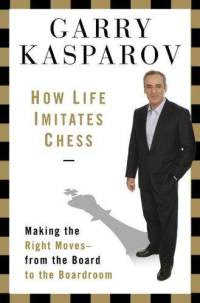
How Life Imitates Chess, by Garry Kasparov

Book cover
The complete title of the book is How Life Imitates Chess: Making the Right Moves, from the Board to the Boardroom, which is a mouthful, but very precise. It does explain how principles of chess, economics and politics apply in all three fields and how Garry Kasparov has evolved from chess player to world champion and, nowadays, into a political anti-Putin figure.

If you ask me, abandoning chess to get into business and worse, politics, it's a complete loss. However I do understand the guy, he got bored. Someday I may abandon computer programming.

Back to the book, though, it felt a lot like The Art of Learning, also written by a brilliant chess player (who incidentally also abandoned chess... hmm). It was more precise, most logical, though, looking at things from a more of a clinical perspective. I would have wanted to learn more about Kasparov's relationship with Karpov, for example, since he is always calling him his nemesis, but never says anything about how he felt about the guy.

This book is peppered with good advice, historic comparisons and great quotes from chess players and great men. Also, short descriptions of the relationship between famous "chess pairs" are giving the book an extra chess dimension. All in all I recommend it highly, although it felt more like a useful reference than a soul book like The Art of Learning.

Thursday, 13 October 2011

Tuesday, 11 October 2011

Optimal use of case insensitive Dictionary in .Net

A question arose at the office today: What is faster? Using a Dictionary<string,object> with a StringComparer.OrdinalCaseInsensitive constructor parameter or using a normal constructor call and using ToLower on the key before using it. The quick answer: using ToLower on the key.

The longer answer is that StringComparer.OrdinalCaseInsensitive implements IEqualityComparer<string> by using a native code function for GetHasCode(), which is very efficient. Unfortunately, it must use the case insensitive string comparison on both input key and stored keys, while calling ToLower on the keys before using them makes the comparison only once.

Wednesday, 28 September 2011

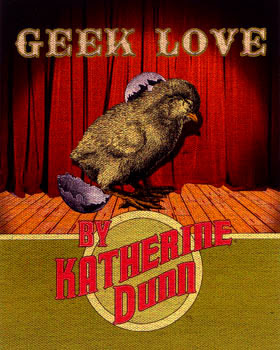
Geek Love, by Katherine Dunn

book coverGeek Love is another title that mislead me. Geek, in this book, refers to the original definition of the word "A carnival performer who does wild or disgusting acts" and not a cool lovable geek as myself. The subject is "controversial": the life of an albino hunchbacked dwarf woman as a member of a carnival family.

There is a lot going on in the book. Carnival people poison themselves in order to make their children as freaky as possible. Said children are then raised only if they are strange enough. The failures are either preserved in glass jars if they are too mutated, or given away if they are too normal. The successes range from the main character, to a sociopath hairless cult leader with flippers instead of members, to siamese sisters that have the same lower body to a telekinetic God like child who only wants to be loved and gets manipulated into doing stuff for others. The sisters later give birth to a grotesquely obese child, fathered by a man with half his face blown up who squirts inside their vagina in his death moment. The death and the face blowing are unrelated. There is more, like a rich heiress who pays beautiful women to mutilate themselves in order to have a better life, unencumbered by the sexual desire of her subjects or of the people surrounding them.

The book itself was pretty innovative, but rather boring. If I had an alternative, I wouldn't have finished it, but as I had not, I am a bit proud of having finished it. If nothing else, the book is strange enough to be interesting. Also the writing is pretty good, introverted, taking the reader inside the mind of a person who considers normal people too bland and treasures her deformity and that of her daughter, fathered through telekinesis with the sperm of her brother.

Don't get me wrong, it was not painful reading the book and I do not regret having reading it. However I wish there was something more interesting in the story other than the strangeness of one's thoughts.

Sunday, 25 September 2011

Portable Game Notation and parsing it with regular expressions

Short version: here is the link to the uploaded .NET regular expression. (look in the comment for the updated version)

I noticed that the javascript code that I am using to parse PGN chess games and display it is rather slow and I wanted to create my own PGN parser, one that would be optimal in speed. "It should be easy", I thought, as I was imagining getting the BNF syntax for PGN, copy pasting it into a parser generator and effortlessly getting the Javascript parser that would spit out all secrets of the game. It wasn't easy.

First of all, the BNF notation for Portable Game Notation was not complete. Sure, text was used to explain the left overs, but there was no real information about it in any of the "official" PGN pages or Wikipedia. Software and chess related FTPs and websites seemed to be terrible obsolete or missing altogether.

Then there was the parser generator. Wikipedia tells me that ANTLR is pretty good, as it can spew Javascript code on the other end. I downloaded it (a .jar Java file - ugh!), ran it, pasted BNF into it... got a generic error. 10 minutes later I was learning that ANTLR does not support BNF, but only its own notation. Searches for tools that would do the conversion automatically led me to smartass RTFM people who explained how easy it is to do it manually. Maybe they should have done for me, then.

After all this (and many fruitless searches on Google) I decided to use regular expressions. After all, it might make a lot of sense to have a parser in a language like C#, but the difference in speed between a Javascript implementation and a native regular expression should be pretty large, no matter how much they optimize the engine. Ok, let's define the rules of a PGN file then.

In a PGN file, a game always starts with some tags, explaining what the event is, who played, when, etc. The format of a tag is [name "value"]. There are PGN files that do not have this marker, but then there wouldn't be more than one game inside. The regular expression for a tag is: (\[\s*(?<tagName>\w+)\s*"(?<tagValue>[^"]*)"\s*\]\s*)+. Don't be scared, it only means some empty space maybe, then a word, some empty space again, then a quoted string that does not contain quotes, then some empty space again, all in square brackets and maybe followed by more empty space, all of this appearing at least once.

So far so good, now comes the list of moves. The simplest possible move looks like 1. e4, so a move number and a move. But there are more things that can be added to a move. For starters, the move for black could be following next (1. e4 e5) or a bit after, maybe if there are commentaries or variations for the move of the white player (1... e5). The move itself has a variety of possible forms:
  • e4 - pawn moved to e4
  • Nf3 - knight moved to f3
  • Qxe5 - queen captured on e5
  • R6xf6 - the rook on the 6 rank captured on f6
  • Raa8 - The rook on file a moved to a8
  • Ka1xc2 - the knight at a1 captured on c2
  • f8=Q - pawn moved to f8 and promoted to queen
  • dxe8=B - pawn on the d file captured on e8 and promoted to bishop


There is more information about the moves. If you give check, you must end it with a + sign, if you mate you end with #, if the move is weird, special, very good, very bad, you can end it with stuff like !!, !?, ?, !, etc which are the PGN version of WTF?!. And if that is not enough, there are some numbers called NAG which are supposed to represent a numeric, language independent, status code. Also, the letters that represent the pieces are not language independent, so a French PGN might look completely different from an English one. So let's attempt a regular expression for the move only. I will not implement NAG or other pieces for non-English languages: (?:[PNBRQK]?[a-h]?[1-8]?x?[a-h][1-8](?:\=[PNBRQK])?|O(-?O){1,2})[\+#]?(\s*[\!\?]+)?). I know, scary. But it means a letter in the list PNBRQK, one for each possible type of chess piece, which may appear or it may not, then a letter between a and h, which would represent a file, then a number between 1 and 8 which would represent a rank. Both letter and number might not appear, since they represent hints on where the piece that moved was coming from. Then there is a possible letter x, indicating a capture, then, finally, the destination coordinates for the move. There follows an equal sign and another piece, in case of promotion. An astute reader might observe that this also matches a rook that promotes to something else, for example. This is not completely strict. If this long expression is not matched, maybe something that looks like OO, O-O, OOO or O-O-O could be matched, representing the two possible types of castling, when a rook and a king move at the same time around each other, provided neither had not moved yet. And to top it off, we allow for some empty space and the characters ! and ? in order to let chess annotators express their feelings.

It's not over yet. PGN notation allows for commentaries, which are bits of text inside curly brackets {what an incredibly bad move!} and also variations. The variations show possible outcomes from the main branch. They are lists of moves that are enclosed in round brackets. The branches can be multiple and they can branch themselves! Now, this is a problem, as regular expressions are not recursive. But we only need to match variations and then reparse them in code when found. So, let's attempt a regular expression. It is getting quite big already, so let's add some tokens that can represent already discussed bits. I will use a @ sign to enclose the tokens. Here we go:
  • @tags@ - we will use this as a marker for one or more tags
  • @move@ - we will use this as a marker for the complicated move syntax explained above
  • (?<moveNumber>\d+)(?<moveMarker>\.|\.{3})\s*(?<moveValue>@move@)(?:\s*(?<moveValue2>@move@))?\s* - the move number, 1 or 3 dots, some empty space, then a move. It can be followed directly by another move, for black. Lets call this @line@
  • (?:\{(?<varComment>[^\}]*?)\}\s*)? - this is a comment match, something enclosed in curly brackets; we'll call it @comment@
  • (?:@line@@variations@@comment@)* - wow, so simple! Multiple lines, each maybe followed by variations and a comment. This would be a @list@ of moves.
  • (?<endMarker>1\-?0|0\-?1|1/2\-?1/2|\*)?\s* - this is the end marker of a game. It should be there, but in some cases it is not. It shows the final score or an unfinished match. We'll call it @ender@
  • (?<pgnGame>\s*@tags@@list@@ender@) - The final tokenised regular expression, containing an entire PGN game.


But it is not over yet. Remember @variations@ ? We did not define it and with good reason. A good approximation would be (?:\((?<variation>.*)\)\s*)*, which defines something enclosed in parenthesis. But it would not work well. Regular expressions are greedy by default, so it would just get the first round bracket and everything till the last found in the file! Using the non greedy marker ? would not work either, as the match will stop after the first closing bracket inside a variation. Comments might contain parenthesis characters as well.

The only solution is to better match a variation so that some sort of syntax checking is being performed. We know that a variation contains a list of moves, so we can use that, by defining @variations@ as (?:\((?<variation>@list@)\)\s*)*. @list@ already contains @variations@, though, so we can do this a number of times, to the maximum supported branch depth, then replace the final variation with the generic "everything goes" approximation from above. When we read the results of the match, we just take the variation matches and reparse them with the list subexpression, programatically, and check extra syntax features, like the number of moves being subsequent.

It is no wonder that at the Regular Expressions Library site there was no expression for PGN. I made the effort to upload it, maybe other people refine it and make it even better. Here is the link to the uploaded regular expression. The complete regular expression is here:
(?<pgnGame>\s*(?:\[\s*(?<tagName>\w+)\s*"(?<tagValue>[^"]*)"\s*\]\s*)+(?:(?<moveNumber>\d+)(?<moveMarker>\.|\.{3})\s*(?<moveValue>(?:[PNBRQK]?[a-h]?[1-8]?x?[a-h][1-8](?:\=[PNBRQK])?|O(-?O){1,2})[\+#]?(\s*[\!\?]+)?)(?:\s*(?<moveValue2>(?:[PNBRQK]?[a-h]?[1-8]?x?[a-h][1-8](?:\=[PNBRQK])?|O(-?O){1,2})[\+#]?(\s*[\!\?]+)?))?\s*(?:\(\s*(?<variation>(?:(?<varMoveNumber>\d+)(?<varMoveMarker>\.|\.{3})\s*(?<varMoveValue>(?:[PNBRQK]?[a-h]?[1-8]?x?[a-h][1-8](?:\=[PNBRQK])?|O(-?O){1,2})[\+#]?(\s*[\!\?]+)?)(?:\s*(?<varMoveValue2>(?:[PNBRQK]?[a-h]?[1-8]?x?[a-h][1-8](?:\=[PNBRQK])?|O(-?O){1,2})[\+#]?(\s*[\!\?]+)?))?\s*(?:\((?<varVariation>.*)\)\s*)?(?:\{(?<varComment>[^\}]*?)\}\s*)?)*)\s*\)\s*)*(?:\{(?<comment>[^\}]*?)\}\s*)?)*(?<endMarker>1\-?0|0\-?1|1/2\-?1/2|\*)?\s*)


Note: the flavour of the regular expression above is .Net. Javascript does not support named tags, the things between the angle brackets, so if you want to make it work for js, remove ?<name> constructs from it.

Now to work on the actual javascript (ouch!)

Update: I took my glorious regular expression and used it in a javascript code only to find out that groups in Javascript do not act like collections of found items, but only the last match. In other words, if you match 'abc' with (.)* (match as many characters in a row, and capture each character in part) you will get an array that contains 'abc' as the first item and 'c' as the second. That's insane!

Update: As per Matty's suggestion, I've added the less used RxQ move syntax (I do have a hunch that it is not complete, for example stuff like RxN2, RxNa or RxNa2 might also be accepted, but they are not implemented in the regex). I also removed the need for at least one PGN tag. To avoid false positives you might still want to use the + versus the * notation after the tagName/tagValue construct. The final version is here:

(?<pgnGame>\s*(?:\[\s*(?<tagName>\w+)\s*"(?<tagValue>[^"]*)"\s*\]\s*)*(?:(?<moveNumber>\d+)(?<moveMarker>\.|\.{3})\s*(?<moveValue>(?:[PNBRQK]?[a-h]?[1-8]?x?(?:[a-h][1-8]|[NBRQK])(?:\=[PNBRQK])?|O(-?O){1,2})[\+#]?(\s*[\!\?]+)?)(?:\s*(?<moveValue2>(?:[PNBRQK]?[a-h]?[1-8]?x?(?:[a-h][1-8]|[NBRQK])(?:\=[PNBRQK])?|O(-?O){1,2})[\+#]?(\s*[\!\?]+)?))?\s*(?:\(\s*(?<variation>(?:(?<varMoveNumber>\d+)(?<varMoveMarker>\.|\.{3})\s*(?<varMoveValue>(?:[PNBRQK]?[a-h]?[1-8]?x?(?:[a-h][1-8]|[NBRQK])(?:\=[PNBRQK])?|O(-?O){1,2})[\+#]?(\s*[\!\?]+)?)(?:\s*(?<varMoveValue2>(?:[PNBRQK]?[a-h]?[1-8]?x?(?:[a-h][1-8]|[NBRQK])(?:\=[PNBRQK])?|O(-?O){1,2})[\+#]?(\s*[\!\?]+)?))?\s*(?:\((?<varVariation>.*)\)\s*)?(?:\{(?<varComment>[^\}]*?)\}\s*)?)*)\s*\)\s*)*(?:\{(?<comment>[^\}]*?)\}\s*)?)*(?<endMarker>1\-?0|0\-?1|1/2\-?1/2|\*)?\s*)

The Regexlib version has also been updated in a comment (I don't know how - or if it is possible - to edit the original).